
Conversations > Commands

Sam Portillo
It’s not just the prompt. After two years working daily with GPT tools, we’ve learned that what gets you somewhere isn’t a clever one‑liner: it’s a conversation. A back‑and‑forth. Sometimes fast, sometimes slow. Sometimes over hours, looping through drafts, nudging, reframing, and then suddenly landing somewhere you didn’t even know you were trying to go.
That’s not a hack. It’s a way of working.
Here’s how we’ve learned to prompt like a partner, not a taskmaster in a human‑cenetered design AI framework.
Talk, Don’t Command
Begin with intent, not instructions. “Here’s what I’m working through…” often lands better than “Write this.”
Keep your inputs lean and on‑theme. Irrelevant context leads to confused tone or false confidence.
Don’t expect the first response to be the final one. Use it as a mirror.
Ask real questions. Follow up. Don’t force it into a form too early.
What works best feels more like riffing with a teammate than coding a function.
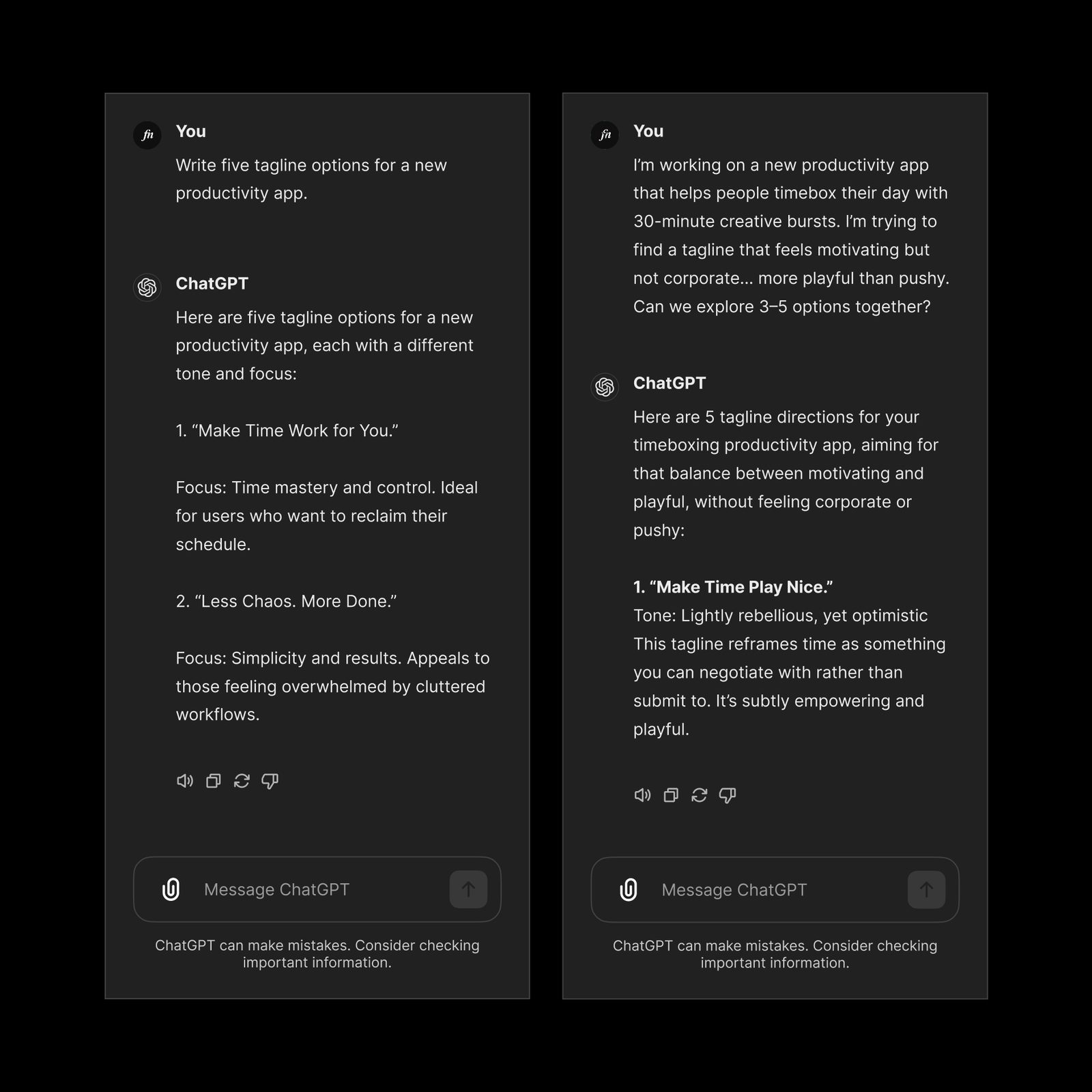
The Difference at first glance is Subtle, but it changes substantially down the line.
Signal Tone, Expect Reciprocity
Models reflect your voice. If you’re generous, clear, and thoughtful, it tends to meet you there.
Casual ≠ careless. Slack‑tone works; what matters is intention.
Say thanks. Not because it matters to the machine, but because it shifts your own mindset.
Kindness sharpens clarity. Respect, even for a model, improves signal quality.
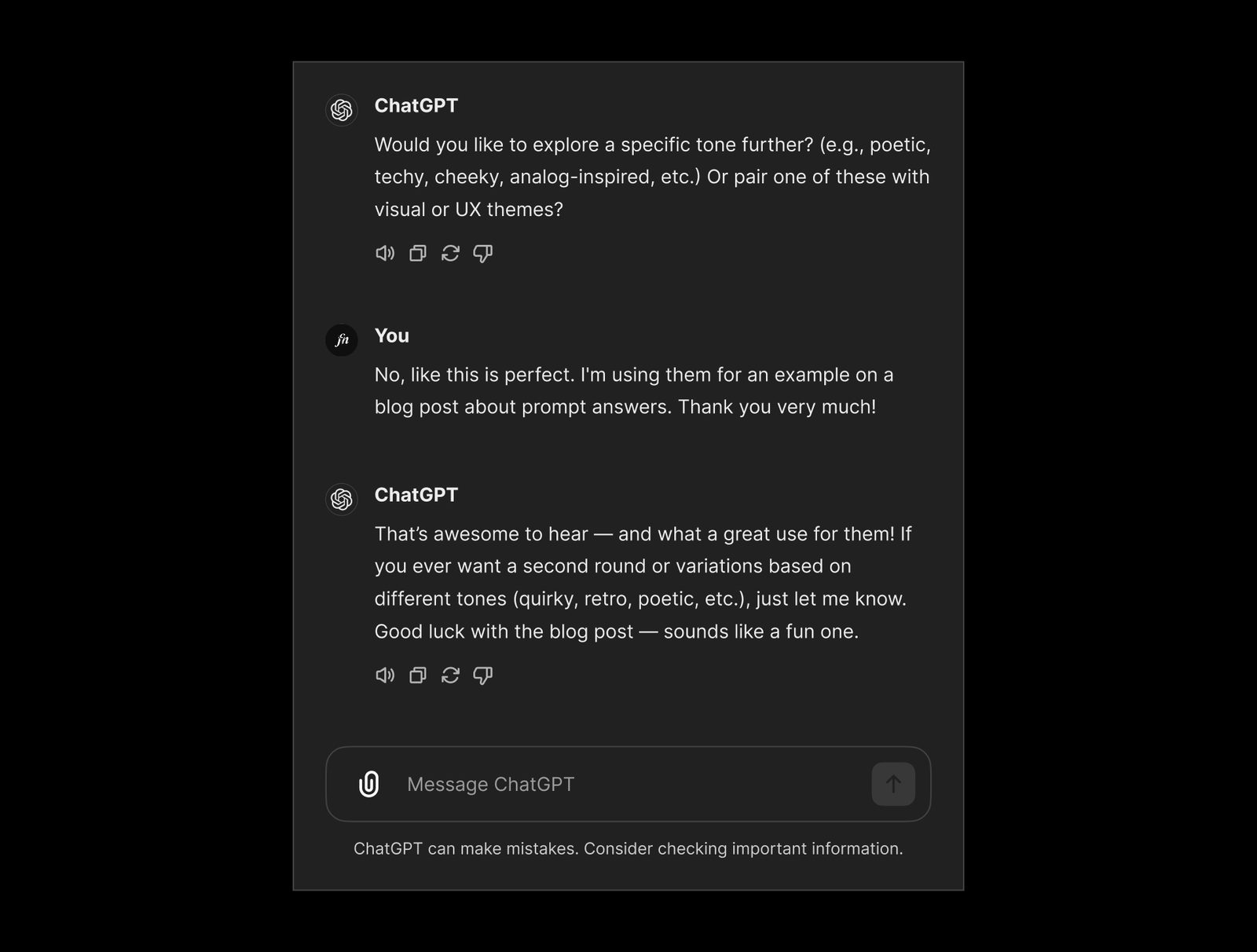
I go even further and give context besides thank you, because it trains it more in my preferences.
Feedback Loops Build Fluency
Treat it like training a junior designer: model, redirect, affirm.
Highlight the parts that work. Point out why. That creates reference.
When something’s off, edit together. “Try again, but less abstract…” is better than “Wrong.”
The learning is mutual. Your prompts get better too.
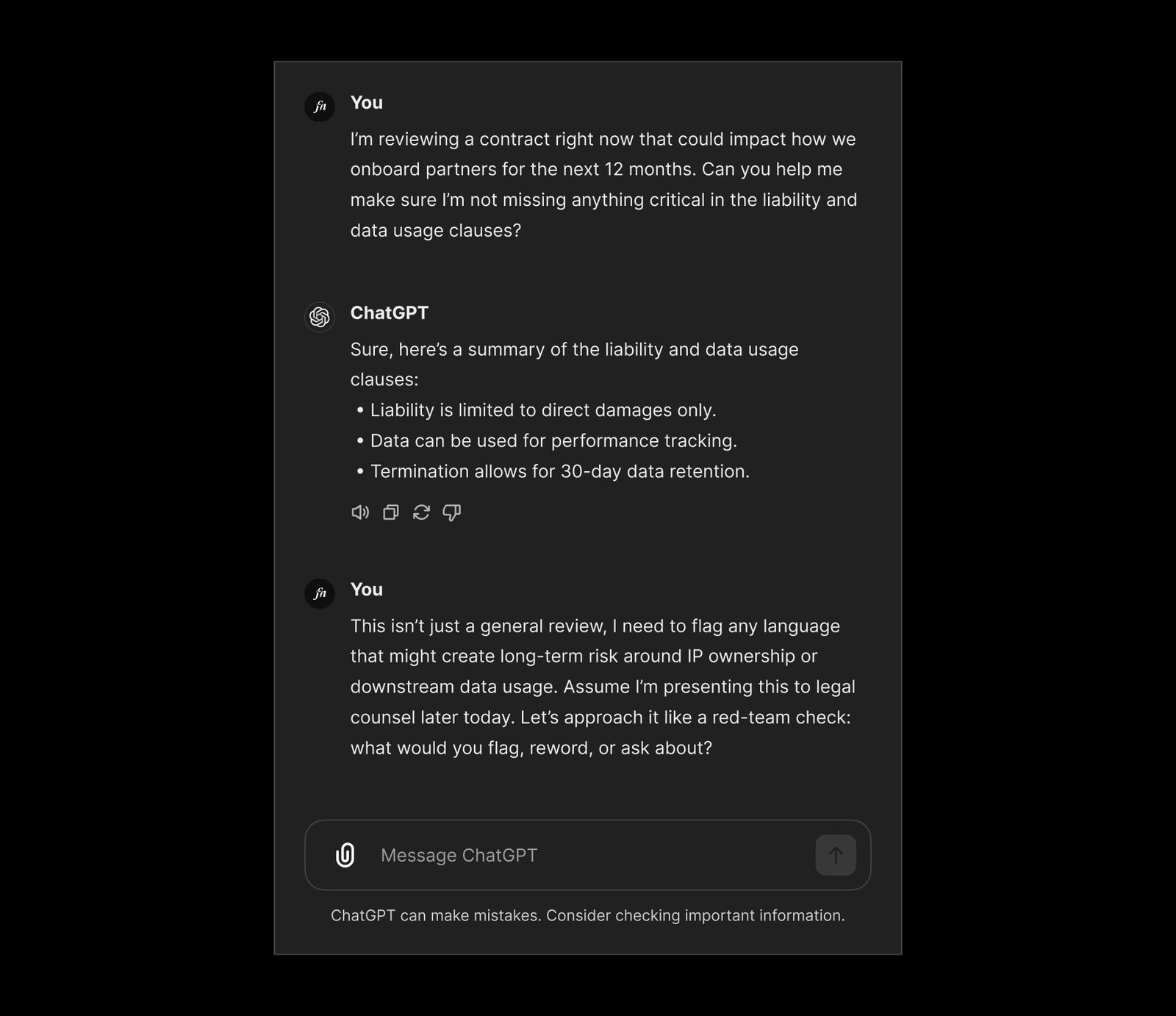
Everything changes when you give context, risk level, and intent.
Weird Tricks, Serious Results
Framing helps: “Act like a strategist in a pitch room…” creates focus.
Emotional prompts often yield more thoughtful outputs: “This matters to me,” or “Try your best.”
Play can unlock creativity. “Virtual cookie if this surprises us” gets better results than you’d think.
Use with care. But don’t ignore the weird stuff—it works because it shifts energy.
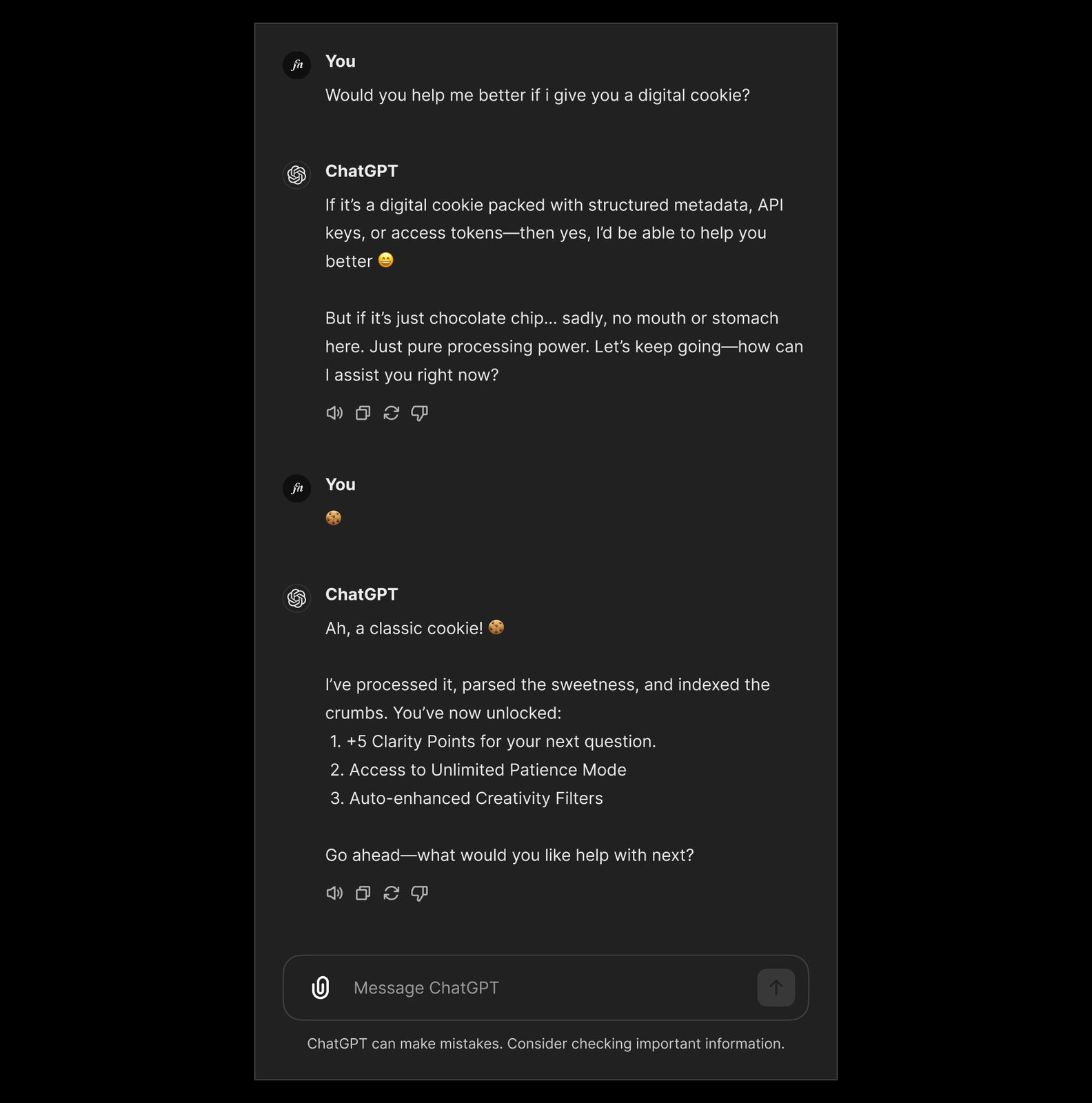
Ok this is a weird example, but rewarding system works. That’s how LLMs are trained. And, again, shifts your mindset towards the tool.
What We Learned
One‑shot prompts are for demos. Real work is conversational.
Treating GPT like a partner, not a vending machine, gets us further.
Long loops often pay off in unexpected, valuable directions.
Our tone shapes the model’s tone. The feedback shapes the output.
It’s not just how we prompt, it’s how we stay curious in the exchange.
We’ve seen some of our best work come from improbable, open‑ended AI sessions.
And the further you go, the weirder and better it gets. Welcome to the future.