The devil is in the details: notes on AI and Creative Direction

Ale Alarcón
When people ask me about working with AI, they usually assume everything starts with a prompt. But after months of creating AI‑generated content for different clients at EL FIN, we’ve learned that it rarely works that way. And I’ll say something a little bold: a lot of the AI‑generated content we see online right now feels strangely generic, and I don’t think that’s entirely a technology problem. Part of the lack of quality in AI generated images probably comes from the pressure many marketing teams are under to constantly deliver content immediately. Brands need assets fast to keep up with campaigns, trends, algorithms, and performance goals. Some clients want things done yesterday, and you can usually feel that urgency in the final result. A lot of teams generate images without prioritizing creative direction, so AI becomes the process instead of a tool that supports it.
At EL FIN, we think very differently about that. Sam, one of the founders, says this all the time: “The goal should never be ‘almost great.’ The standard has to be greatness.” And that level of quality lives in the details: small styling decisions, textures, the way objects interact, and the internal logic of an environment. As I always say, the devil is in the details. A prompt can start an image, but the person behind it is what finishes it. AI also tends to make everything feel “too perfect,” especially food. Things become too clean, too rounded, too smooth. But if you want something to feel believable, you need evidence of life: crumbs, irregularities, imperfections, the kinds of details people recognize from real experience.
When the studio’s Editorial team invited me to write this, I saw it as an opportunity to talk honestly about what this process actually looks like. Because the truth is, producing images with AI has very little to do with writing a couple of prompts and calling it a day. At least not in the way we approach it at the studio.
What Art‑Directed AI Actually Looks Like
At EL FIN, we approach AI image generation much more like a traditional creative production than people might expect. Our team is made up of people with real experience in their respective fields, and that background inevitably shapes the way we use these tools. The work starts before generation. Before we iterate, we investigate. We’ve studied how audiovisual production companies work and how they integrate AI into their own workflows, so we can build a process of our own.
A lot of our process is built around references and observation. Before generating anything, we think about casting, styling, locations, composition, lighting, and direction. In many ways, we end up wearing every hat at once: casting directors, stylists, location managers, photographers, gaffers, and directors. The goal is never just to create images that look visually impressive. It’s to create images that feel coherent within their own world, where every visual decision supports the story being told.
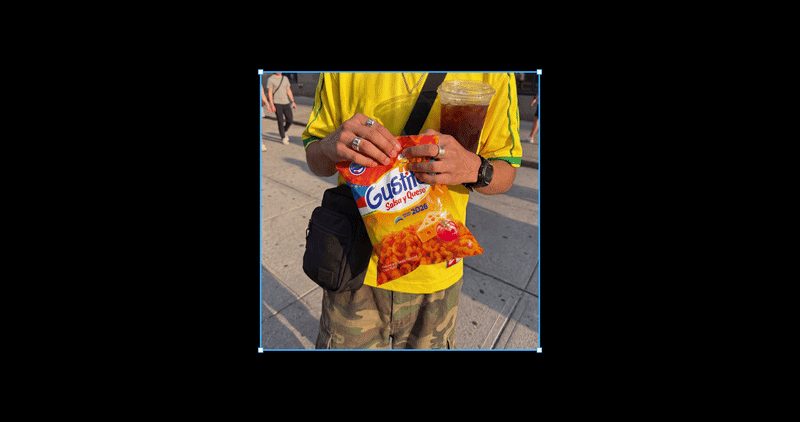
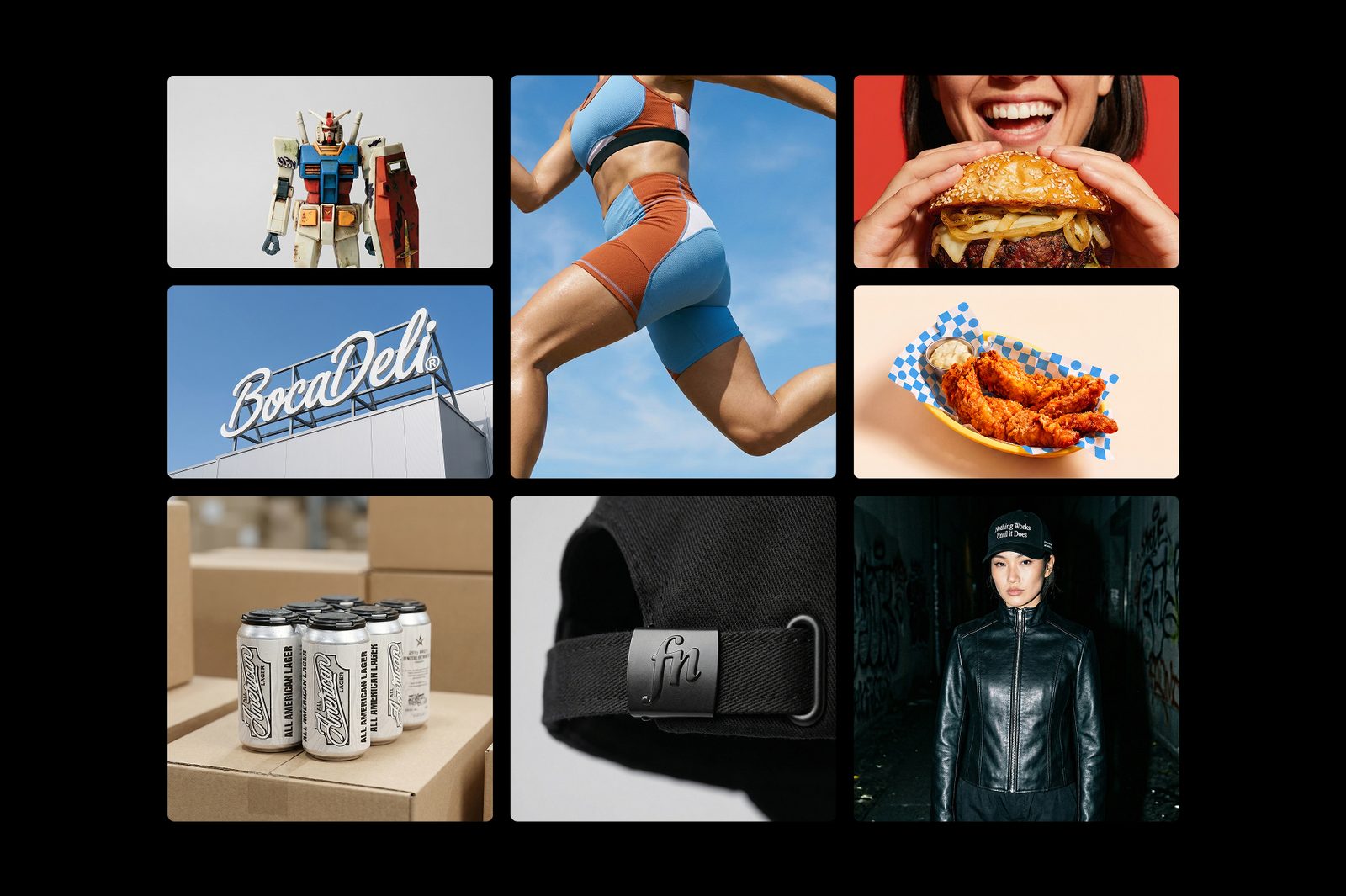
One of the clearest examples of this happened while working on a recent campaign for Bocadeli USA. We spent time researching American culture and everyday environments to understand where people would realistically consume the product. Stadiums, parks, food trucks, social dynamics, consumption habits. We explored several visual directions and discarded some of them because, even if they looked interesting aesthetically, they didn’t make cultural sense. At one point we stopped and asked ourselves: who would realistically bring these snacks into a bar? That same thinking guided every creative decision we made.
To me, AI cannot work properly without cultural sensitivity and context. Creativity isn’t only about making beautiful images. It’s about making images that feel believable for a specific audience, in a specific situation, with a logic people instantly recognize even if they don’t consciously notice it. That mindset is something I care deeply about. For me, design should do more than just look good. It should build solutions that genuinely help our clients grow.
The Work Doesn’t End at Generation
Because we’re becoming so used to seeing LLMs say they’re “thinking,” there’s this growing assumption that AI‑generated images work the same way: you type a prompt and a fully resolved, campaign‑ready image appears instantly. But in reality, that’s usually where another stage of the process begins. Depending on the complexity of the image, I can spend almost an entire day in post‑production refining a single visual.
In my experience so far, there are still several things AI consistently struggles with: text, anatomy, textures, product accuracy, and small inconsistencies that immediately break the illusion. And in commercial work, precision matters. If we’re working with packaging, it has to be exact. Typography needs to be correct. Products need to feel real, consistent, and recognizable. People love to zoom in, so every detail has to hold up, not only for our credibility, but for the client’s too.
This kind of work requires manual editing, compositing, separating elements, correcting details, rebuilding textures, and carefully curating the final result. Anyone who tells you otherwise will probably deliver something that looks too similar to what they made for the last client, or what they’ll make for the next one. Generation is only one part of the work. What still defines the quality is the eye behind it, at every stage of production.
What “Good” Taste Actually Means
That’s why I believe the creative person behind the image is what really makes the difference. Everyone has access to similar tools now, but not everyone has the same visual vocabulary, attention to detail, or ability to imagine new worlds before they exist. For this kind of work, good taste matters, but it has to be supported by technical knowledge, an understanding of design, composition, lighting, styling, and the intuition to know which direction is actually worth pursuing.
And I don’t think good taste is something absolute or objective. For me, it has more to do with understanding what a project actually needs, what the client needs, and what the audience will connect with. Taste gets trained through observation, through years of looking closely at images, films, photography, design, and culture until you build a visual vocabulary of your own.
That becomes even more important when working with AI because the tools can generate almost anything now, but the difficult part is still knowing what actually makes sense visually, emotionally, and culturally. I always think about it like roller skates. The skates matter, of course, but the person skating is still the one behind the performance.
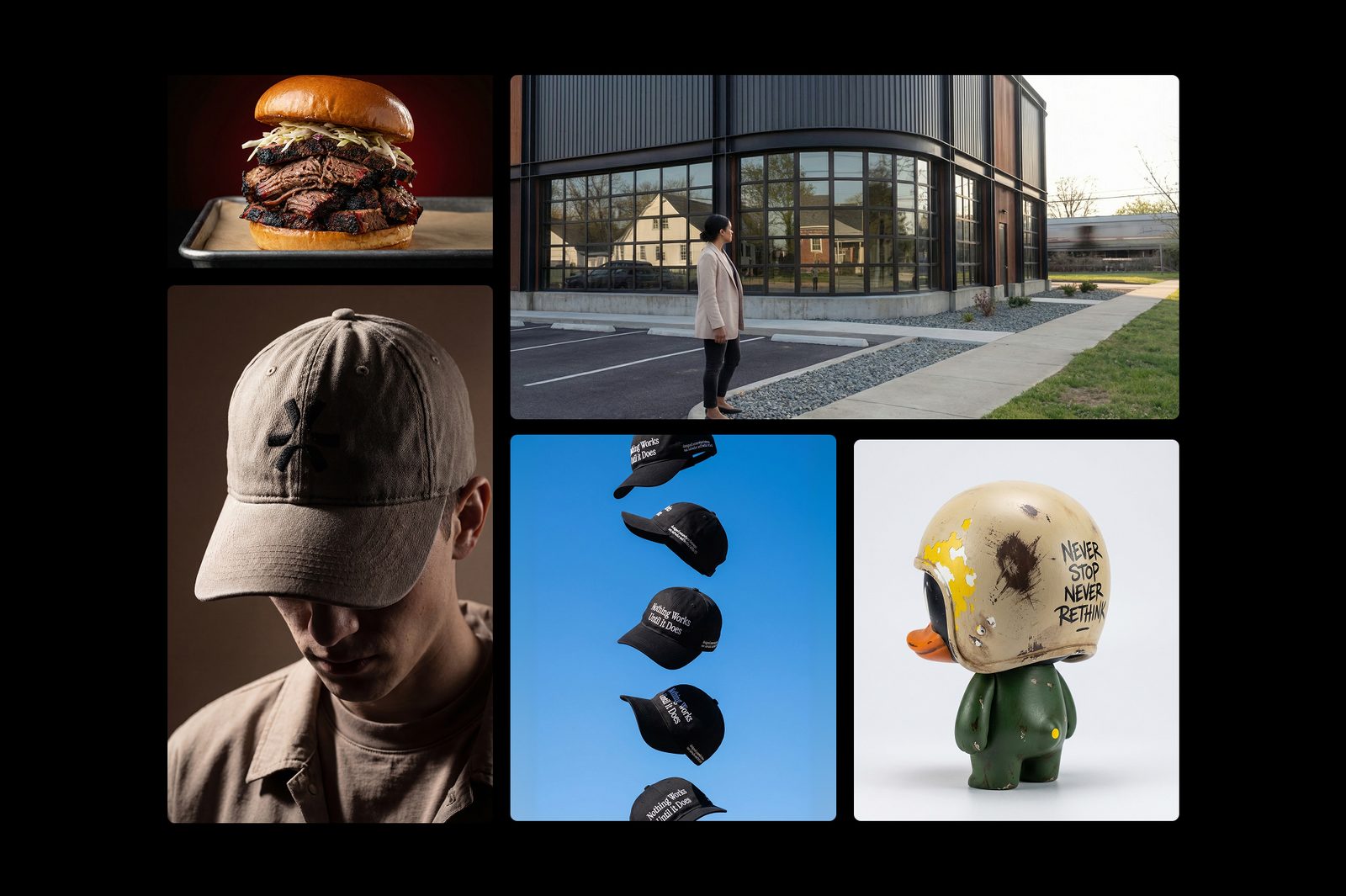
At EL FIN, art‑directed AI isn’t about generating random beautiful visuals. It’s about building consistency across an entire visual system and making sure design assets feel coherent from one to another. Honestly, one of my favorite moments is when someone at the studio realizes an image was AI‑generated only after looking at it twice. Even people with trained eyes can forget about the tool when the image has been crafted carefully enough.
A Different Kind of Creative Process
I don’t think AI removes the need for creative work. If anything, it makes creative direction even more important. At EL FIN, we often talk about how the hard part isn’t the technology itself, but building the thinking around it. Sam said it really well in a recent interview: “The hard part is knowing one’s brand well enough to give AI useful constraints.”
The more accessible these tools become, the more important it is to have a clear point of view, strong creative systems, and people behind the work who know how to shape them intentionally. That’s probably what interests me most about this moment. Not the speed of the tools, but the fact that they still depend so heavily on human taste, direction, and experience to create something people genuinely connect with.
On a personal level, this work has brought together many of the things I’ve always been drawn to: creative direction, art direction, production, technology, and even fashion through styling. In this role, I’ve been able to explore all of those interests at once, and I think that’s part of what makes the process feel so personal to me. I’m grateful to EL FIN, and to Sam and Carlos for trusting me, because this work has given me the freedom to imagine, design, and produce images through a creative direction that feels entirely my own.